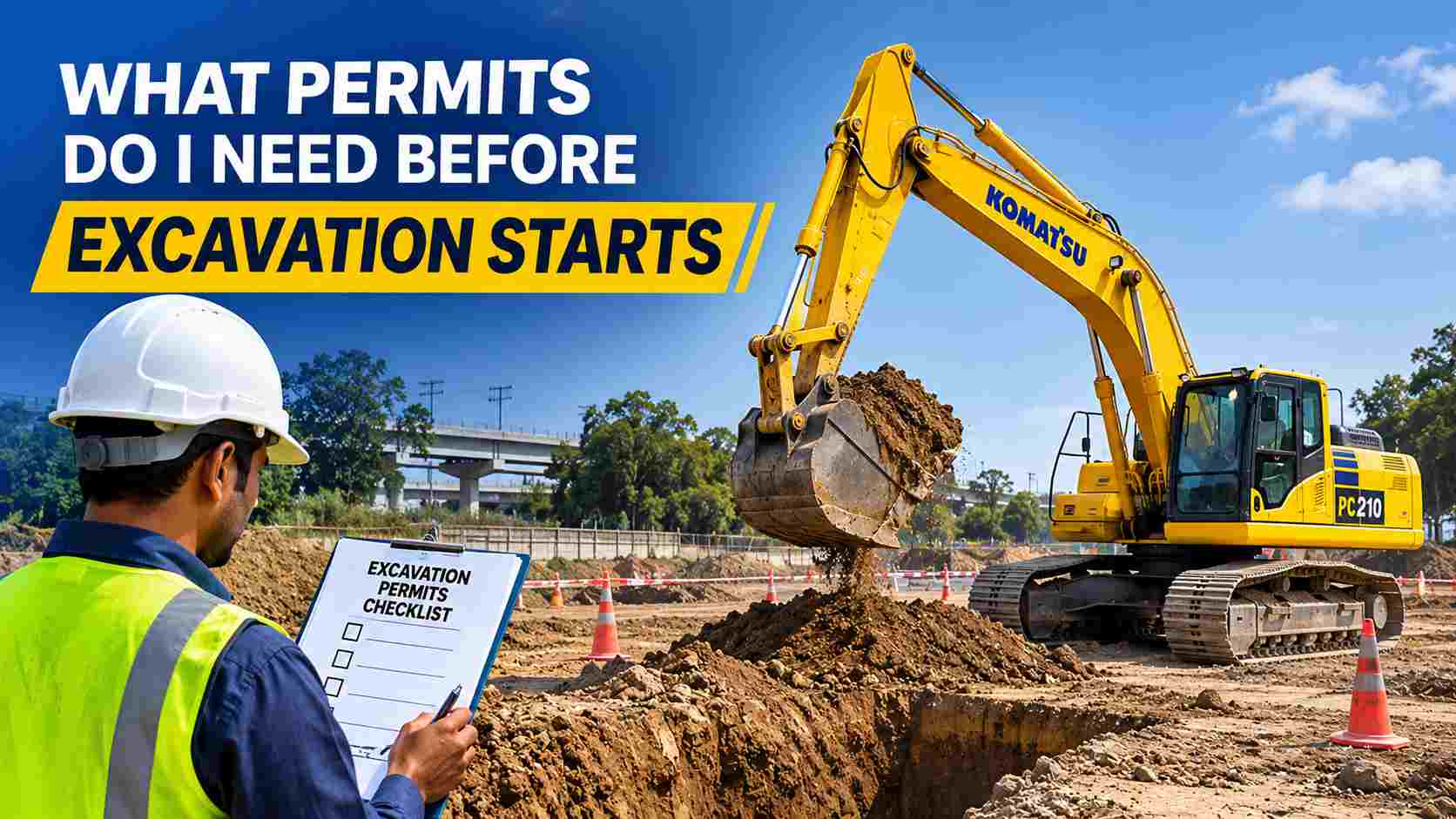
Once you start an excavation, you will need a range of approvals and permits to confirm the work you do is legal and safe. These can vary based on where you're working, your depth, and why you're doing the work, but may include excavation permits, road-cutting or utility clearance certificates, environmental or building permits, and more. When operating any excavator, such as the **Komatsu PC205-10M0**, you need the relevant approvals to avoid legal issues or delays.
Top 6 Permits That I Require Before Starting Excavation Works
1. Excavation Permit
An excavation permit is an important approval required before any excavation work. It gives the contractor permission to excavate in a defined area under certain conditions. This permission may be provided by the municipal local authority, development authority, or another relevant government department. Drawings of the work, the plan of the site, the depth of the excavation, and the work being done might be submitted by the contractors. The permit also allows authorities to monitor excavation work to ensure it doesn't affect adjoining roads, structures, or public services.2. Utility Clearance and Underground Service Certification
Before excavator operation, contractors should look for the following underground utilities:- Water supply pipelines
- Electrical cables
- Gas pipelines
- Telecommunications cables
- Sewerage and drainage network
3. Road Cutting and Traffic Permissions
If required, the contractor must obtain permission from the municipal corporation/PWD/authority owning the road to cut the road, footpath, or side-road land during excavation. Permission to cut roads is especially important for installing pipelines and drain lines, carrying out road work, and providing utilities. Contractors will also need approval for traffic management, including temporary diversions, signs, barricading, and pedestrian protection.4. Environmental Clearance
Environmental approvals may be needed for large excavation projects, depending on where they are located, how large they are, and their potential environmental impact. Examples include activities that involve considerable land disturbance, such as mining or development, or those that take place in environmentally sensitive areas. Ask yourself whether authorisations are needed, for example for environmental clearance, tree-felling clearance, groundwater extraction licence or any others that are pertinent to your project. Have these ready before you move heavy machinery and get caught short.5. Building and Construction Approval
Excavation will need prior approval for all relevant building plans and development permissions. The regional planning authority may require final architectural and structural drawings, site strategies, land ownership details, and foundation details. If deep excavations are involved, you may need further structural evidence showing that surrounding buildings and structures will not be harmed during construction.6. Safety Approvals and Site Preparation
In addition to any authorisations from government, contractors need to have suitable company health and safety procedures in place just before any type of excavation is begun. In certain projects and in accordance with certain standards, these could be:- Approved excavation method statements
- Risk assessments and job safety analysis
- Emergency response procedures
- Barricading and warning signage
- Worker training and equipment inspection records
- Shoring or protective systems for deep excavations