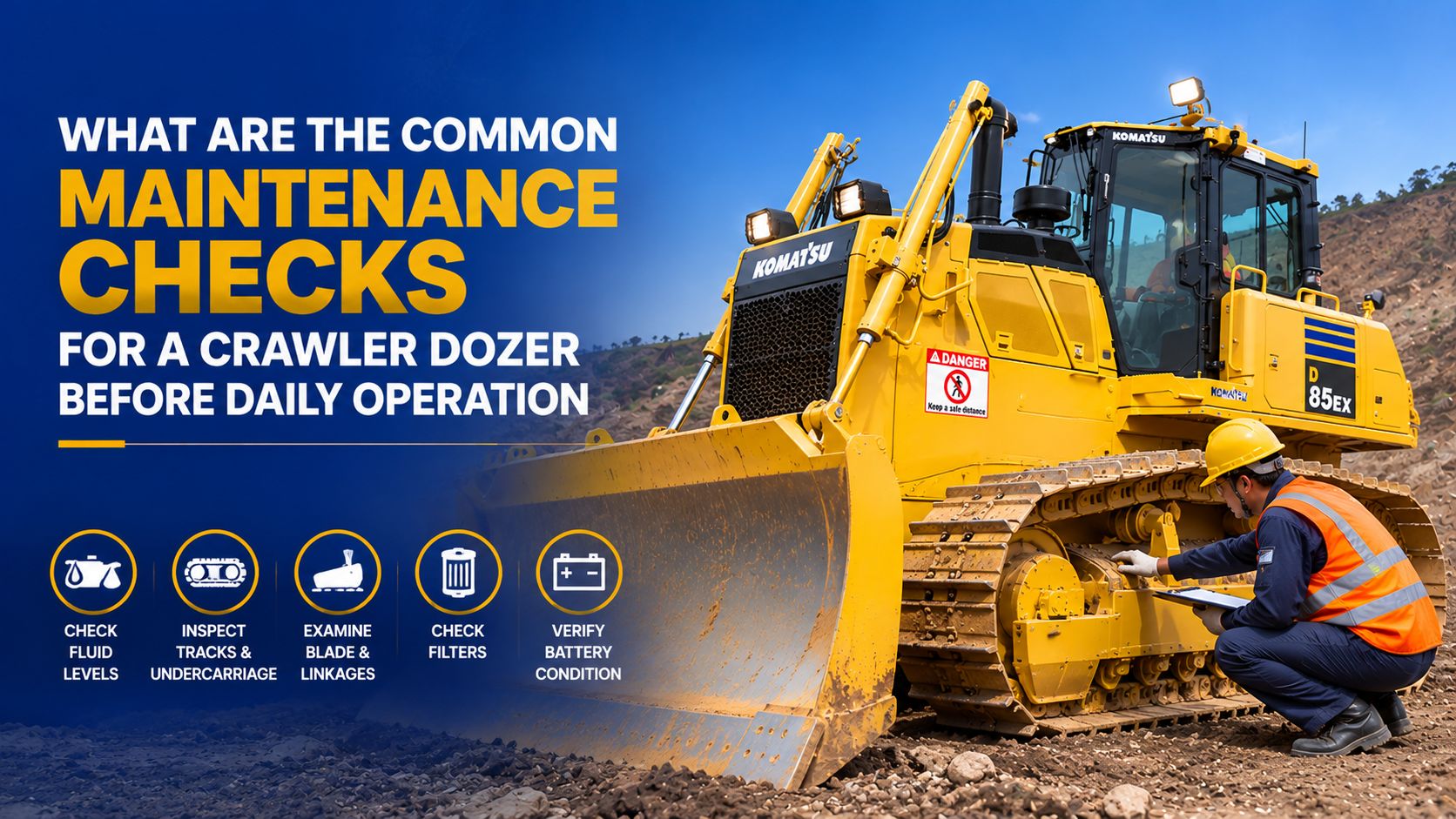
A crawler dozer is one of the most work-intensive machines on most construction and mining sites in India. A 10-minute pre-shift inspection can help avoid unforeseen breakdowns, expensive repairs, and lost working hours. In India's harsh conditions, the most critical dozer crawler maintenance tasks focus on the undercarriage, cooling system, fluids, and working attachments. This is a broad outline of a routine that can be performed on machines like the Komatsu
D85ESS-2A; consult the Komatsu Operation and Maintenance Manual for the specific machine for final instructions.
Daily Dozer Checks at a Glance
| Area |
What to check |
Why it matters |
| Undercarriage |
Track tension, rollers, idlers, shoes, and sprockets |
Helps prevent excessive wear |
| Cooling system |
Radiator, cooling fins, hoses, and coolant |
Reduces overheating risk |
| Fluids |
Engine oil, coolant, hydraulic oil, and specified powertrain fluids |
Helps protect major components |
| Fuel and air |
Fuel level, water separator, and air cleaner |
Supports reliable engine operation |
| Blade and ripper |
Cutting edges, pins, shanks, and fasteners |
Maintains working performance |
| Hydraulics |
Hoses, cylinders, connections, and oil level |
Helps identify leaks and damage |
| Cab safety |
Seat belt, lights, alarms, mirrors, and access steps |
Supports safe operation |
| Start-up test |
Gauges, warning lamps, steering, and controls |
Identifies faults before work begins |
Before You Start: Safe Preparation
Do park the
bulldozer on level, solid ground; lower the blade and ripper; set the parking brake; and turn off the engine before performing a walk-around inspection. If applicable, unplug the key, and don't allow any unexpected movement of the machine. Use appropriate personal protective equipment (PPE), and never look at parts near moving parts. Before the inspection, follow the site's earthmoving safety procedures.
Walk-Around Inspection (Engine Off)
1. Ground Under the Machine
Check for new puddles or stains. Dark or amber-coloured oil may indicate an oil leak, and coloured or sweet-smelling liquid may indicate a coolant leak. Hydraulic fluid may range in colour from clear to amber or dark. Never use touch or taste to identify a fluid.
2. Leaks, Cracks and Loose Parts
Check all the final drives, hydraulic cylinders, hose connections, guards, bolts, pins, and their covers. Before running the machine, report any new leaks, broken hoses, missing hardware, or cracks.
3. Install steps, handrails, and cab access
Clear steps and handrails of mud, grease, and debris. Clean the access points to prevent slips and falls, particularly during the monsoon.
Undercarriage Checks: The Most Important 5 Minutes
Maintenance has always been critical for crawler dozer undercarriages. Therefore, inspect regularly, especially on Indian construction and quarry sites, where mud, abrasive soil, and rocks accelerate wear and tear.
1. Clean Out Packed Mud and Debris
Clear away old mud, rocks, and other debris from the track frame and undercarriage. Hardened clay can prevent inspection and cause wear around the rollers, idlers, and sprockets. Then, thoroughly check the track tension and its condition while operating.
2. Check Track Tension Under Working Conditions
Use the model manual to check track tension by following the procedure provided. This may not reflect the machine's working conditions, as ground conditions and packed material can affect the measurement.
For example, some sources say the Komatsu D85ESS-2A has a track sag specification of 20 to 30 mm. Check the figure and the overall measurement method in the official manual before you put it into service. Never use this type of measurement for the
D85ESS-2A or any other unique model without verification.
3. Rollers, Idlers and Sprockets
Check for oil leakage at roller seals, missing bolts, cracks and uneven wear. Damaged or unexpected noises should be reported as soon as possible.
4. Track shoes, pins and bolts
Inspect shoes for abnormalities or wear, and check for loose or missing shoe bolts.
5. Tell-Tale Signs
If the left track is worn out compared to the right, there may be a problem that needs to be investigated.
Cooling System Checks
Dust, leaves, and mud can block the radiator fins and the oil coolers. As a result, they may not draw in enough air. Follow the operator's manual to check the coolant level, cooling package, fan, belts, and hoses. Even after cleaning, surfaces can still be blocked by debris.
Never open a hot radiator cap. Wait until the overall system has cooled down before checking or servicing, as directed.
Engine Oil, Coolant and Fuel Checks
At times, engine oil, coolant, and fuel are checked regularly.
1. Engine Oil Level
Stop on a flat surface and check the oil as per the manufacturer's instructions. Therefore, only fill with the recommended grade of engine oil.
2. Coolant Level
Check the reservoir regularly when the engine is cold. If you have recurring coolant loss, don't just top it up; address the underlying problem.
3. Fuel Level and Water Separator
Continuously verify fuel availability and check the water separator. Therefore, try to release surplus water as per the manual, even during monsoon season or when fuel is taken from storage drums.
4. Air Cleaner
Try to verify the dust restriction indicator and inspect/service the air cleaner as specified. Thoroughly avoid high-pressure air unless the manufacturer has specifically stated it is permitted and precautions are given.
Hydraulic and Power Train Checks
Thoroughly check the hydraulic oil level, hoses, connections, and the hydraulic blade and ripper cylinders for leaks and damage.
Hydraulic Oil Level and Hoses
Inspect cylinder rods for scoring or pitting, which can damage seals. Review whether maintenance schedules call for transmission and steering fluid changes, and follow the procedure.
Power Train Oil
Simply check the transmission, steering, and final drive oil levels per the operator's manual and bulldozer operation. Watch for leaks, contamination, and abnormal discolouring. Use the correct oil grade, and report damage or abnormal oil levels before operation.
Cylinder Rods
Thoroughly inspect all the hydraulic cylinder rods for scratches, bends, rust, or oil leaks around the seals. Keep the rod surfaces clean and free of debris. Report any damage or leakage to the maintenance team before operating the bulldozer.
Blade, C-Frame and Ripper Checks
Inspect cutting edges and end bits for wear, damage, and loose fasteners. Also check the push arms, pins, bushings, ripper shank, and ripper tip for cracks or looseness. Check the grease-specified pivot points per the manual, and remove excess grease that can collect dirt.
Cutting Edge and End Bits
Thoroughly inspect the cutting edge and end bit for wear, cracks, looseness, and damage. Ensure all bolts are secure, and replace excessively worn parts to maintain effective dozing performance and prevent blade damage.
Push Arms, Pins and Bushings
Check for cutting edges and the end bits for wear, damage, and loose fastenings. Also check the push arms, pins, bushings, ripper shank, and ripper tip for cracks and looseness. Regularly apply grease to the specified pivot points per the manual, and clean off excess grease, which can quickly trap dirt.
Ripper Shank and Tip
Examine the shank and tip for cracks, wear, bends, or damage. Ensure that mounting pins and fasteners are tight. Replace worn tips to optimise ripper performance and avoid damage during use.
Greasing
Apply grease at the specified locations, such as the blade linkages, ripper joints, and pivot pins, at the maintenance intervals. Use the correct grease type, and ensure the grease fittings are not damaged. This will reduce friction and early wear.
Electrical, Battery and Lights
Inspect battery connections, cables, work lights, horn and back-up alarm. Check for moisture or corrosion around electrical connectors, especially after rain. Check wiring for damage or unreliable alarms before use.
Cab and Safety Checks
Check that the ROPS/FOPS mounting and shape haven't been damaged. Check that the seat belt pulls, mirrors, cameras, fire extinguisher, windows, and windscreen wipers aren't damaged. Make sure the access panels are free, and the cab floor is clean.
Start-Up and Operational Checks
Gauges and Warning lamps.
Run the machine as per the manufacturer's instructions. Check that warning lights and gauges are working properly and that values are returning to normal after warm-up. Check for any active warnings.
Listen and Feel
Listen for abnormal noises, vibrations, smoke, and slow hydraulic response. If symptoms suggest a potentially serious fault,
Controls, Steering and Brakes
Also change the oil tank and oil filter. At low speed, test steering, braking and blade and ripper movements in a designated, clear area. Test controls to ensure they work properly before entering the work area.
Warm-Up
Let engine and machine systems warm up according to the directions in the manual. Avoid heavy loads until operating conditions are suitable.
What Operators Can Check vs What Needs a Mechanic
| Operator checks |
Mechanic or qualified technician |
| Visual inspection and leak reporting |
Persistent or difficult-to-locate leaks |
| Fluid-level checks |
Repairs to hydraulic or powertrain systems |
| Cleaning and prescribed greasing |
Track-tension adjustment where specialist work is required |
| Basic safety-device checks |
Detailed wear measurements and component diagnosis |
| Reporting warning lamps and unusual noises |
Electrical faults and unresolved warnings |
Adjusting Your Daily Checks for Indian Conditions
1. Monsoon and Mud
Thoroughly inspect packed mud, track conditions, fuel-water separators, electrical connectors, and slippery access steps. Recheck the undercarriage when overall working conditions change rapidly.
2. Summer Heat and Dust
Pay close attention to all cooling fins, air-cleaner restriction, coolant level, and signs of overheating. Follow the recommended cleaning intervals.
3. Rocky and Quarry Work
Conduct proper inspections of all track shoes, rollers, sprockets, blade edges, and ripper tips for accelerated wear and potential damage.
4. Night Shifts
On night shift, conduct a proper check of all work lights, alarms, and visibility before starting. Ensure operators are well rested and thoroughly check the work area.
Keep a Simple Daily Log
Simply record the machine hours, completed checks, date, defects that are found, and the signature of the operators. A continuous log helps you identify recurring problems, plan thorough servicing, maintain regular documentation, and support warranty discussions and resale inspections.
A Worked Example: Why "Clean and Level" Isn't How the Machine Works
The operator thoroughly measures track tension on a clean, level yard before the morning shift; the measurement is within the model's range. The bulldozer is on a muddy monsoon site, and we have shifted weather systems around the world, changing the conditions where track-tension measurement occurs.
At times, a natural reading of the yard won’t reflect the apparatus's true conditions. The proper response is to follow the manufacturer's inspection and measurement procedure, with due regard to operating conditions. A competent person carries out any adjustment properly.
While the practical common practice is pretty straightforward, inspect the equipment on site, consider the overall condition of the site, and follow the model-specific method rather than assuming one set of readings applies to everything.
How Komatsu India Supports Dozer Owners
Dozers
Browse all Komatsu bulldozers and speak to an authorised dealer to learn the specifications and maintenance requirements for each model, such as the
D85ESS-2A.
Undercarriage Inspection and Preventive Maintenance
Regular undercarriage inspections can catch wear early before a bigger repair is needed. Inquire about maintenance and inspection assistance that can be provided for your machine and application.
Authentic Parts. Training and Lubricants for Operators
Use spares and lubricants that satisfy the manufacturer's specs. Operator training can also help prevent damage to your equipment, from daily inspections to unexpected breakdowns.
Monitoring
Ask KOMTRAX in Komatsu India about monitoring and whether the current machine supports KOMTRAX. Ensure the tracking feature is supported in India before using the system for maintenance planning.
Bottom Line
A dependable crawler dozer daily maintenance checklist should include the undercarriage, cooling system, fluids, hydraulics, blade, cab safety, and start-up checks. Modify as needed for site conditions, and document all defects and repairs. Contact Komatsu India or an authorised dealer for the maintenance checklist for your model.
Frequently Asked Questions
1. What should be checked before starting a crawler dozer?
Check the undercarriage, fluid levels, cooling system, leaks, blade, ripper, safety devices, and warning lights.
2. How often should I check the dozer track tension?
Follow the manufacturer's inspection schedule, and inspect more often in adverse conditions or when material has built up.
3. Can an operator perform daily bulldozer maintenance?
Operators should be able to carry out prescribed visual inspections, fluid checks, cleaning and general greasing but experts can do specialised adjustment or repairs.