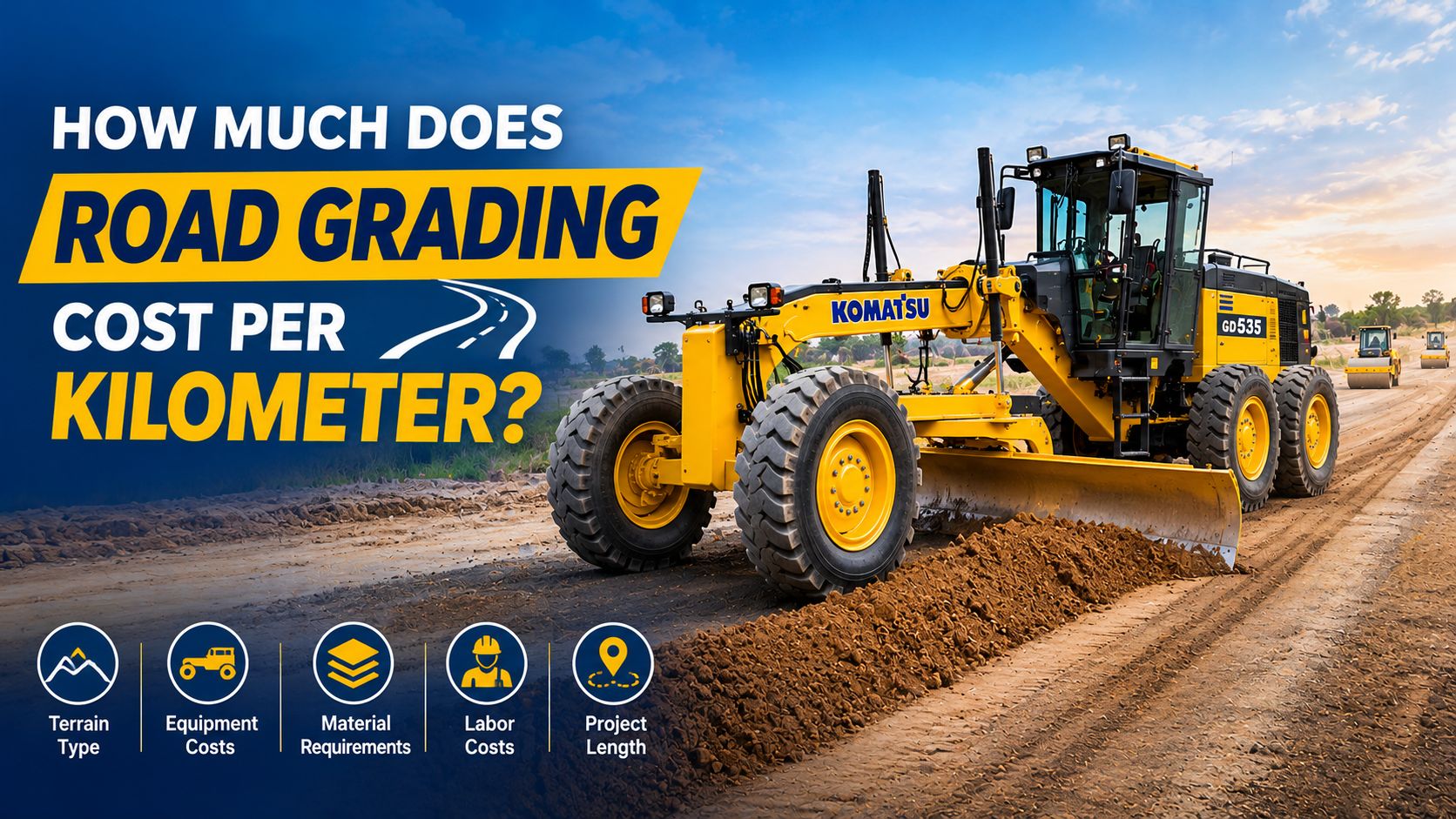
The cost of road grading per km varies widely based on road width, surface type, soil type, land topography, grading depth, local labour costs, and required machinery. In India, basic road grading on an existing unpaved road could cost around ₹20,000-₹60,000 per km for simple grading work.
Still, more complex work may involve more earthmoving, reshaping, and additional costs for drainage correction. Contractors must consider site conditions and machinery needs before estimating costs, using equipment like
motor grader and
bulldozer to increase productivity.
1. Road Condition and Existing Surface
The road surface itself is one of the biggest influences on grading costs. An evenly flat gravel road that requires regular levelling is usually less costly to grade than a badly rutted road with heavy potholes, gouging, and soil pushed around.
Road grading requirements may include:
- Removing surface irregularities
- Filling potholes and depressions
- Redistributing loose gravel
- Correcting road slopes
- Reshaping road shoulders
Other roads that require more earthmoving and compaction may cost more.
2. Road Width and Length
Road dimensions directly affect the work extent. Roadwide cars require more material to move as well as an extra hour of machinery. For example, grading a narrow rural road may require fewer passes than grading a wide industrial access road. While pricing per kilometre is common, factors such as road width, the number of grading passes, and surface profile can be used to develop budgets for related work.
3. Type of Terrain and Soil
Terrain environments can affect cost and productivity. Flat, level terrain is typically much easier to work on than uneven, hilly sites. Rocky terrain, firm soils, and steeper slopes will most likely require site preparation, typically earthmoving.
Wet or muddy ground tends to reduce efficiency and extend work hours. Contractors should inspect the site to identify ground conditions and whether to proceed with the grading.
4. Equipment Used for Road Grading
Machinery selection significantly affects road grading cost.
Motor Grader
These machines from
Komatsu India Private Limited are the main equipment used to level or shape the road surface and form the designed cross slope. They distribute loose material along the road surface, smoothing and evening it out.
Bulldozer
A
bulldozer is ideal when road grading requires heavy soil excavation, removal of unsuitable material, and shaping irregular ground. The machines increase productivity: the bulldozer handles heavy earthmoving, and the motor grader finishes the surface.
5. Labour, Fuel, and Transportation Expenses
Earthwork pricing often fails to account for the total cost of road grading.
Some of the high costs include the following:
- Operator wages and labour charges
- Diesel consumption
- Equipment transportation and mobilisation
- Routine maintenance and repairs
- Additional machinery rental
- Site supervision and safety arrangements
Additional expenses may include transportation and mobilising project assets to remote projects, for example.
6. Drainage and Additional Work Requirements
Road grading is not always just levelling the surface. It can include extra steps to improve drainage and road strength.
This may involve reshaping side drains, providing suitable cross slopes, clearing ditches and compacting the surface.
The cost per kilometre would go up if these tasks were part of the project's scope. But removing standing water isn't just part of our plan. It also benefits the environment.
7. How to Estimate Road Grading Costs
Before establishing a road grading budget, the following should be taken into consideration:
| Cost factor |
Impact on project cost |
| Road width |
Wider roads require more work |
| Surface condition |
Damaged roads need additional grading |
| Terrain |
Rocky and hilly areas increase operating time |
| Equipment |
Machine size affects rental and operating costs |
| Labour and fuel |
Influence daily operating expenses |
| Drainage work |
Adds extra construction requirements |
A detailed site assessment and equipment productivity estimate can determine a more accurate cost per kilometre than the standard rate.
Conclusion
Factors like road size, terrain, and surface conditions will also influence your grading costs. You will also need machinery and workers, plus fuel and drainage, to finish the job.
Motor graders can smooth the surface once it's prepared, but bulldozers are needed to move dirt and prepare the site. Proper planning can help you minimise those cost overruns.
Frequently Asked Questions
1. How to grade a road on a budget?
Choosing the right equipment, designing equipment passes for maximum efficiency, and scheduling regular maintenance can all help lower road-grading costs.
2. What type of machine do you need for road grading?
A motor grader is ideal for accurate road levelling and shaping, while a bulldozer suits tasks involving significant earthmoving.
3. Is the cost of grading per km influenced by the width of the road?
Yes, the wider the road, the more passes over the grade, the more machinery hours, and the more machinery required.