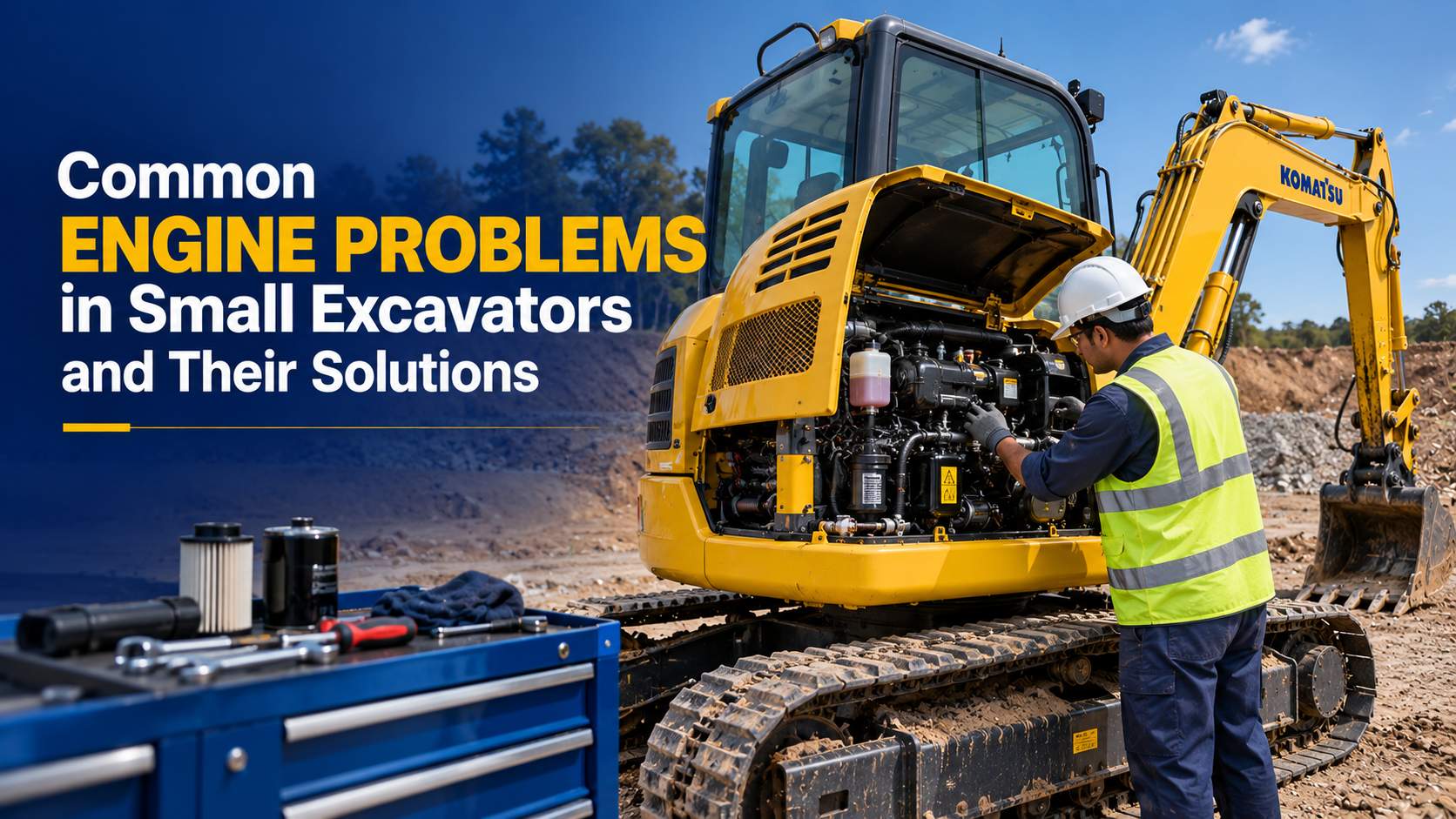
For the contractor, a stalled excavator is more than a machine waiting to be used; it can hold up an entire crew and its work, including trenching, foundation work, roads, or plot work. The good news is that with most hydraulic excavators, many engine failures have nothing to do with the engine at all – and can be pinpointed very quickly. In many cases, checking the air, fuel, heat and electrics will reveal a problem when the engine seems to have failed to start, particularly in the 3-13 tonne class, including PC71 and PC81 machines.
Quick Reference: Causes, Likely Cause, First Check
| Causes | Likely Cause | First Check |
|---|---|---|
| Hard starting | Battery/fuel/air | Battery and fuel supply |
| Black smoke | Restricted air | Air cleaner |
| White smoke | Cold start/water | Fuel separator |
| Blue smoke | Oil burning | Oil level |
| Overheating | Blocked cooling system | Radiator/cooler fins |
| Loss of power | Air/fuel restriction | Filters |
| RPM hunting/stalling | Fuel or hydraulic load | Fuel and operating load |
| Knocking/noise | Injector/internal wear | Stop and inspect |
| Low oil pressure | Low/wrong oil or wear | Oil level/warning |
Why Small Excavator Engines Fail Differently in India
Never on the page, generic online troubleshooting fails to consider Indian site conditions. Construction, with its dust, quarry and demolition operations, inconsistent fuel storage, seasonal monsoon dampness, hot summer climes and distant job sites,s can elevate minor maintenance issues to performance snags.
1. Dust and Dried Mud
Dust settling on the air cleaner and on the surfaces of the cooler or radiator fins comes mainly from quarry, roadwork, and demolition sites. However, old mud deposits can clog airflow to the cooling surfaces. This can cause black smoke from the air cleaner, cold, incomplete combustion, and high engine temperatures from clogged fins.
2. Fuel Quality and Storage
Refilling from drums and on-site tanks can also bring water, dirt, and other impurities into the fuel system. During monsoons, moisture and changing ambient temperatures can cause water condensation in your tank. You also need to monitor water separators and fuel filters.
3. Summer Heat and Monsoon Mud
Ambient temperatures are very hot, and additional heat decrease the time available for work with extended digging operations. Soggy soil tends to stick to the cooling fins and freeze to them. Watch for dirt buildup on the cooling fins while working.
4. Remote Sites and Operator Habits
Uncontrolled idling or a heavy overload can turn a small issue into costly downtime. A routine inspection can catch restrictions, leaks, warning lights, or unexpected noises before production grinds to a sudden halt.
8 Common Engine Problems in Small Excavators and How to Fix Them
Below are the 8 most common engine problems in Komatsu PC210 small excavators and how to troubleshoot them. You can often eliminate most engine problems quickly during troubleshooting without replacing expensive parts first.
1. Engine Won't Start or is Difficult to Start
Likely Causes
- Weak battery
- Loose battery terminals
- Lock lever not in LOCK position
- Fuel starvation
- Air in the fuel line
- Faulty glow plugs when the engine is cold
Solution
Just test the battery and cables, and confirm the lock lever is in the correct position. Check the fuel level, fuel filter and fuel delivery, and bleed air from the fuel system. If the starter turns on with a clicking sound but does not engage the engine, test the battery, battery terminals, and starter circuit.
2. Black smoke coming from the exhaust.
Likely Causes
- Choked air cleaner
- Damage or wear on the injector
- Excessive engine load
- The fuel is of low quality or is contaminated
Solution
Inspect the air cleaner element and replace it, as necessary. Do not use compressed air to blow out a paper-type air element; it will destroy the entire filter media. Check for overloading, and if the engine still releases black smoke after checking the air/fuel, ask a professional service shop to check the injectors.
3. White or Blue Smoke
The Likely Causes
- White smoke during cold start
- Water in fuel
- Cold water entering the combustion system
- Blue smoke produced by oil burning.
- Overfilled sump
- Rings and valve seals are worn
Solution
If you suspect fuel contamination, drain the water separator and inspect the fuel feed. Check engine oil levels and for overfilling. Authorised personnel should perform compression and coolant system checks if the white smoke does not clear once the engine is operating, or if the blue smoke persists.
4. Engine Overheating
Likely Causes
- Clogged radiator, or that of the oil cooler
- Low coolant
- Incorrect coolant mixture
- Faulty radiator cap
- Slipping belt
- Thermostat problem
- Water-pump fault
Solution
Reduce engine speed and let the machine cool slowly. Avoid hot shutdown immediately following hard work. Never open the hot radiator. After cooling, inspect cooling fins, coolant level and belts. Remember, the hydraulic oil also has a cooling system. Machine derating may occur even if the engine cool temperature appears satisfactory because of hydraulic oil temperature issues.
5. Loss of Power
Likely Causes
- Presence of a restricted air filter
- Excessive operating temperature
- Worn injectors
- Low compression
Solution
A simple diagnostic procedure is to check the air filter, fuel filter, temperature, injectors, and compression. If the engine runs better once the machine has cooled down, it is likely heat-related rather than injector-related.
6. The RPM drops when a load is added and stalls.
Likely Causes
- Air in the fuel system
- Contaminated diesel
- Intake-air leak
- Excessive hydraulic load
Solution
Simply determine the problem. If RPMs dip when digging or doing other heavy-duty hydraulic work, check the hydraulic load and engine response. If the engine hunts or stalls at idle, verify the fuel is high quality, air flows freely into the fuel system, and the fuel line is clear.
7. Knocking, Unusual Noise or Vibration
Likely Causes
- Injector fault
- Incorrect timing
- Incorrect valve clearance
- Worn bearings
- Loose engine mounts
Solution
If the engine is vibrating or knocking, stop the engine; do not roar over the sound. Check ground-accessible mounts and visible external damage, then call your trained service representative. A hot-running car with a loud engine can mean serious, costly engine failure.
8. Low Oil Pressure Light or Oil Burning Too Much Oil
This car represents everything to oil. It's the most important life-giving fluid and your engine's identity.
Likely Causes
- Low oil level in the engine
- Diluted oil
- Incorrect oil grade
- Clogged oil filter
- Internal engine wear
Solution
Pay heed to this warning. When this light comes on, the machine is always on. Ensure you're using the correct lubricant for the listed oil grade and the particular model and environment you're working in. Do not top up if excessive oil is being consumed by an engine, equipment or tool—have the engine, equipment or tool fixed before topping up.
A Field Example: The "Dead Engine" That Wasn't
Imagine you're field troubleshooting this common example: The machine is an excavator, and one day it suddenly loses power and then refuses to operate properly. You might suspect an injector, so you would start by replacing one, hoping it fixes the problem. But instead of replacing components right away, you would run a few simple diagnostics.
A closer look revealed mud and rubbish blocking the cooler faces, restricting heat rejection when the engine was working hard. Removing the fuel contamination and allowing unrestricted airflow through the cooler returned engine performance to normal. The takeaway lesson is to check the air, fuel, and heat before jumping on the injectors. This is a hypothetical troubleshooting example, not a report of a real L&T/Komatsu India Private Limited service event.
The 10-Minute Daily Check That Prevents Most of These Failures
1. Before Starting
Adjust engine oil, coolant, and fuel levels. Drain the water separator as needed, check the air-cleaner indicator, and check the whole machine for fuel, oil, coolant, or hydraulic leaks.
2. While Running
Observe the temperature monitor and warning lamps. Watch out for any new sounds, vibrations, abnormal engine behaviour, or changes in exhaust colour. Slight changes can warn you before a breakdown.
3. After Shutdown
After hard work, allow the engine to wind down to an idle as required. Clean cooling fins, if required, and top up at the end of your shift, if conditions allow, to reduce any water buildup in the tank.
Always refer to the machine's Operation & Maintenance Manual for the proper inspection & service intervals rather than hour counts.
When to Stop and Call Authorised Service
To turn the operation off and request service, make sure:
- Low engine-oil pressure warning
- Engine knocking or severe abnormal noise
- Repeated overheating
- Persistent white smoke after warm-up
- Coolant and engine oil mixing
- Unexpected or repeated engine stalling
These symptoms could signal failures that you should never diagnose through ongoing trial-and-error component swapping.
How Komatsu India Helps Keep Your Engine Healthy
Genuine Parts and Lubricants
Always, start to use genuine parts and authentic lubricants specified for the PC210 hydarulic excavator helps you maintain the equipment's intended performance and reliability. Komatsu India Private Limited supports genuine parts and genuine lubricants.
Remote Monitoring with Komtrax
Komatsu's remote equipment monitoring system, KOMTRAX, provides equipment owners and managers with a monitorable record of operating information, helping them better manage their equipment fleet. Features and functions are available on selected models and configurations.
Preventive Maintenance and Operator Training
Regular service and skilled on-site operatives can certainly identify and fix problems before they become critical. Komatsu India's services include service-contract programs, operator training, and preventive-maintenance services.
Conclusion
Most small-excavator engine problems do not lead to complete engine destruction or failure. Begin with the fundamentals: air, fuel, heat and electrics, then go on to injectors, compression or internal engine elements as indicated. Periodic inspections, sound operational procedures, quality genuine lubricants and spares, and scheduled maintenance can all prevent unwelcome down time. If symptoms are severe or unremitting, call Komatsu India or a trusted service partner.
FAQ
1. What are the typical engine issues that small excavators encounter?
Hard starting, black smoke, overheating, loss of power, uneven RPM, strange noises and low oil pressure.
2. What causes a small excavator engine to lose power?
Power loss can result from reduced air or fuel flow, overheating, injector failure, or low compression.
3. How do I avoid engine issues in hydraulic excavators?
Oil, Coolant, Fuel and Air Filters, Cooling Fins, and alerts. Check the oil, coolant, fuel and air filters, cooling fins, alerts, and the machine's Operation & Maintenance Manual regularly.